Should You Use AI or Commission a House Portrait? A New Zealand Artist's Perspective
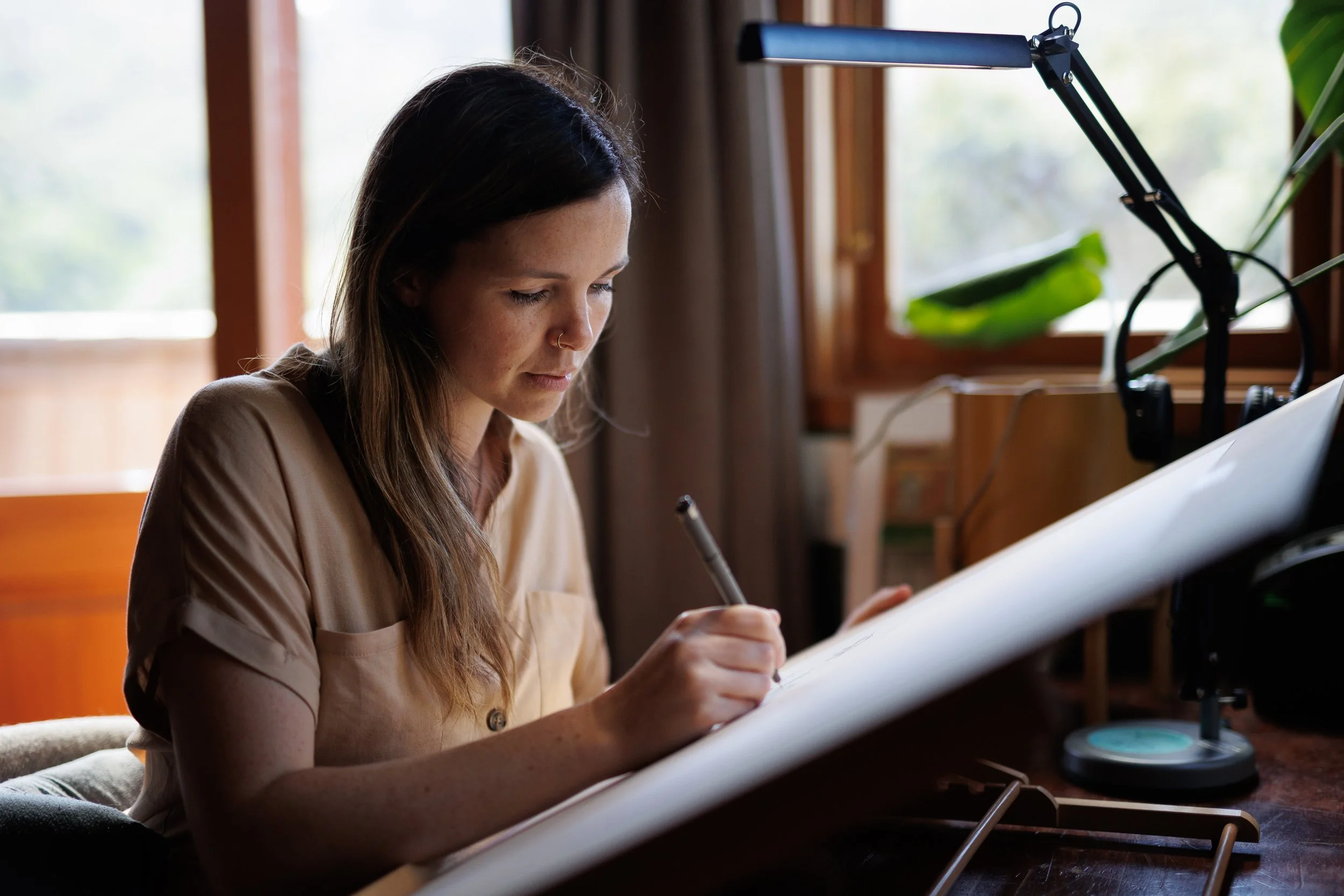
There’s no denying it, AI has changed the creative world.
In just a few minutes, you can upload a photo of your house, type a few prompts, and receive something that looks remarkably like a watercolour painting.
For some people, that's enough.
But if you're looking for a piece of art that will hang in your home for decades, I think there's something worth considering. When someone walks into your home and notices a beautiful house portrait, the conversation almost always begins the same way.
"Wow… that's gorgeous. Who painted it?"
Imagine your answer.
"Oh... AI made it."
Conversation over.
It's a little anticlimactic, isn't it? Now imagine a different answer.
"A local Wellington artist painted it. She specialises in architectural watercolours. We worked together to include our old pōhutukawa tree that was removed years ago, and she left out the neighbour's caravan. I've followed her work for years and finally commissioned one of my own."
Suddenly, the artwork isn't just something on the wall, It's a story and people remember stories.
The artwork is only half of what you're buying
When you commission an artist, you're not simply purchasing the finished piece, you're investing in the person behind it. The conversations, the sketches, the experience of watching your home become artwork, the excitement of opening the package.
Knowing another human being spent hours carefully drawing every window, every roofline and every little detail that makes your home yours.That journey becomes part of the artwork itself.
AI simply can't give you that.
The best gifts aren't the easiest ones
Think about giving someone a portrait of their home. They unwrap it.
"Oh my goodness... I absolutely love it!"
Then they ask, "Who made it?"
Now imagine replying, "I used AI."
There's an awkward pause, not because the picture isn't nice, but because you've unintentionally revealed that the gift required very little thought, collaboration or craftsmanship.
Now imagine saying,
"I commissioned a local artist. I worked with them to include the old blossom tree because I knew Mum loved it. They even removed the car from the driveway and added the garden just as it looked when we were kids."
The artwork instantly carries more meaning, not because it looks better, but because it means more.
AI is surprisingly hard to get right
Ironically, people often think AI is the quicker option and sometimes it is, but often, it isn't.
You upload photo after photo, rewrite prompts and…
The roof isn't quite right.
The windows are wrong.
The proportions feel off.
The front fence disappears.
The house suddenly has three chimneys instead of one.
You generate version after version, hoping the next one will finally be "the one”, but somehow it never quite captures the character of the place. That's because AI isn't drawing your home. It's predicting what houses generally look like.
An artist notices the things AI overlooks…
The way afternoon light hits the veranda.
The slightly crooked gate you've never quite fixed.
The climbing roses your grandparents planted.
The details that matter because they're part of your story.
The bottom line
Art is about connection…
As artists, we spend years learning our craft, thousands of hours studying perspective, colour, composition, architecture and storytelling.
Not because a computer couldn't eventually imitate the result, but because creating something meaningful takes observation, empathy and intention.
AI learns from billions of existing images, and artists learn from life.
So... which would you rather own?
An image that was generated in seconds or an artwork that someone carefully created for you.
Years from now, I don't think people will remember the prompt that generated an image, but they'll remember the artist they met at an art show, the commission they saved up for, the excitement of seeing their family home transformed into something completely unique.
Technology will keep changing,but the value of human stories never will.
If you're choosing artwork that's going to become part of your family's history, perhaps the better question isn't,
"Could AI make something similar?"
It's,
"What story do I want this artwork to tell?"